Inside Conversion Conf Warsaw 2026: The Quiet Shift From Volume Affiliates To High‑Intent Case Study Partners
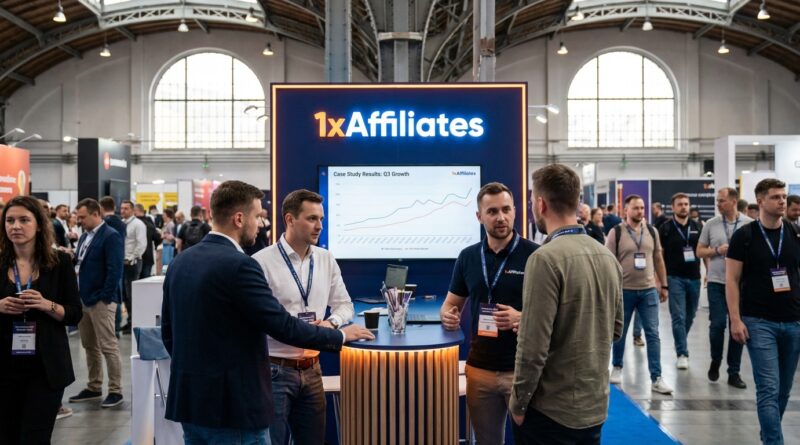
You know the feeling. You sit through panel after panel, someone flashes a traffic graph, someone else brags about EPC, and by the end of the day you still have no clue how any of it turns into an actual five-figure customer. That frustration was hanging over Conversion Conf Warsaw 2026, too. But this time, a quieter story was happening offstage. The people leaving with real pipeline were not always the loudest affiliates or the booths with the biggest screens. They were the ones having short, focused conversations built around one thing: a clean case study that proved buyer intent, deal size, sales cycle, and what happened after the click. That is the useful shift. If you want a practical Conversion Conf Warsaw 2026 affiliate marketing case study, the lesson is simple. Stop selling traffic volume first. Start showing the kind of buyer journey that makes a program believe you can send customers, not just clicks.
⚡ In a Hurry? Key Takeaways
- The strongest booths at Conversion Conf Warsaw 2026 won attention with tight case studies, not raw traffic bragging.
- If you want high-ticket deals, bring one-page proof of buyer intent, sales process, deal size, and post-click results.
- This approach is safer for tight budgets because it helps both affiliates and programs qualify each other fast, before wasting months on a bad fit.
The quiet change on the show floor
Most conference coverage goes for the obvious stuff. Big announcements. Packed keynotes. People taking photos in front of branded walls.
What mattered more in Warsaw was much less flashy.
The affiliates getting serious follow-up meetings were not pitching themselves as traffic machines. They were pitching themselves as partners who understood a specific buyer, a specific pain point, and a specific sales motion. They could say, in plain English, “Here is the audience. Here is the content angle. Here is what kind of lead came through. Here is how that lead moved to a call. Here is the average contract value. Here is why this worked.”
That lands differently from “We can send 20,000 clicks next month.”
For high-ticket offers, clicks are cheap. Qualified trust is expensive. The booths that understood that looked busy for the right reasons.
Why volume talk is losing some of its shine
Volume still matters. Nobody is pretending traffic is irrelevant. But in high-ticket affiliate, the old flex is getting weaker because too many people can fake the look of scale now.
AI can produce endless comparison pages, average email copy, and a mountain of surface-level content. That means conference buyers are hearing the same promises over and over. More traffic. More top-of-funnel. More reach.
What they are not hearing enough is this: what kind of visitor turns into revenue, under what conditions, and how long it takes.
That is why the case-study-led affiliates stood out in Warsaw. They gave programs something concrete to react to. Not theory. Not a screenshot. A business story.
What buyers actually wanted to know
In booth chats and side meetings, the useful questions were surprisingly basic:
- Who exactly is the reader or viewer?
- What problem were they trying to solve when they clicked?
- Was this an impulsive lead or a researched buyer?
- How long did it take to close?
- What was the contract value or customer value?
- Did the affiliate content pre-sell the buyer properly?
If you had good answers, people kept talking. If you only had traffic numbers, the conversation often drifted.
The booth play that kept working
The strongest setup was not complicated. In fact, part of why it worked is that it was easy to understand in under two minutes.
Step 1: Lead with one specific case study
Not a deck full of vague wins. One case study.
Something like this:
- Niche: B2B service, premium software, finance, legal, health, education, or another high-trust category
- Audience: Founder-led companies with 10 to 50 employees
- Content angle: Comparison, buyer guide, cost breakdown, migration story, or “best fit for” analysis
- Traffic source: Organic, newsletter, webinar, private community, or targeted paid source
- Result: Lower lead volume, but better call booking rate and stronger close value
That gives the other side something to picture. It moves the talk from vanity to fit.
Step 2: Show the path after the click
This was the real separator.
The better affiliates could explain what happened between the referral and the sale. They knew whether the landing page asked for a demo, a call, an application, or a quote. They knew what sales teams needed from the lead. They knew whether the audience needed proof, urgency, pricing clarity, or a human handoff.
That matters because high-ticket affiliate is rarely about the click alone. It is about whether the click arrives ready for the next step.
Step 3: Qualify the program in return
The smartest affiliates in Warsaw were not acting desperate for any deal. They were interviewing programs, too.
They asked:
- What is your real close rate from qualified affiliate leads?
- What does your sales team do in the first 7 days?
- Can you track offline conversion events back to content themes?
- What customer profile makes you the most money?
- What deal sizes justify custom content and deeper promotion?
That changes the relationship. You are no longer just a source of clicks. You are a growth partner trying to match buying intent to a working sales process.
What a good case study looked like in practice
Let’s make this concrete.
A useful high-ticket affiliate case study at an event like Warsaw did not need to be fancy. It needed to answer the questions a serious program manager or founder is already thinking about.
The one-page format
Several effective teams used some version of this structure:
- Buyer profile. Who was the person?
- Problem. What expensive issue were they trying to solve?
- Content asset. What article, video, webinar, email, or landing page brought them in?
- Intent signal. What showed they were close to buying?
- Sales handoff. What happened after the click?
- Revenue outcome. Not always exact numbers, but a realistic range or quality indicator.
- Why it worked. Message match, timing, trust, or niche authority.
That format is simple enough for a booth conversation and strong enough to start a real partnership discussion.
Why this works better than a media kit
A normal media kit says, “Here is our audience.”
A case study says, “Here is how our audience buys.”
That is a much stronger answer when budgets are under pressure.
What affiliates should copy from Warsaw
If you are an affiliate and you attend one event this year, treat your booth chat like a deal-screening process, not a popularity contest.
Bring these four things
- A one-page case study with actual business context
- A short explanation of your audience’s buying moment
- Questions about the program’s close process and attribution
- A clear idea of what kind of partner is worth your time
You do not need a huge stand. You do not need ten looping dashboards. You need proof that your content can move someone from interest to action.
Skip the “we can do anything” pitch
This is where a lot of affiliate conversations go wrong.
If you tell every sponsor you can promote any vertical, any funnel, any audience, you sound broad but weak. The better move is to sound selective. Tell them where you win. Tell them where you do not. That honesty builds trust fast.
What programs should copy from Warsaw
This lesson cuts both ways.
Programs that got stronger responses were not just sitting behind tables waiting to be impressed. They came ready with their own mini case studies. They could explain what a good affiliate-sourced customer looked like, what content angles had worked before, and where their internal sales team performed best.
Give affiliates the missing middle
Many programs still talk in two disconnected pieces:
- Top of funnel: “We want more leads.”
- Bottom of funnel: “We close high-value accounts.”
What affiliates need is the middle. What happens in between? Which leads get ignored? Which ones get fast-tracked? Which content themes produce better calls?
The programs that shared that middle part had better conversations because they helped affiliates picture the path to revenue.
Make it easy to repeat
If one affiliate case study worked, turn it into a repeatable playbook:
- Approved content angles
- Best-fit buyer traits
- Pre-qualification questions
- Suggested landing pages
- Expected timeline to sale
That is how you turn event buzz into something that survives the trip home.
Why this matters more in April 2026
Travel budgets are tighter. Conference teams are being asked harder questions. “Was it worth it?” is no longer a casual post-event thought. It is a finance question.
That changes behavior.
You cannot justify a trip with vague brand exposure and a handful of business cards. You need pipeline. Better yet, you need a method that gives you a good shot at pipeline every time.
That is what made the Warsaw shift interesting. It was practical. It respected the reality of 2026. Fewer people are impressed by noise. More people want proof that an in-person event can create deals that would not have happened over email.
The simple system you can steal for your next event
If you want one practical play to use, here it is.
Before the event
- Choose one case study only
- Trim it to one page or one tablet screen
- Write three qualifying questions for prospects
- Book follow-up slots before you travel
At the booth
- Open with the buyer problem, not your traffic size
- Explain the journey from content to close
- Ask what kind of customer makes them the most money
- End by agreeing on one test campaign, not a vague future chat
After the event
- Send the case study within 24 hours
- Recap the agreed buyer profile in writing
- Suggest one content angle or funnel test
- Set a review date tied to pipeline metrics, not just clicks
It is not glamorous. That is exactly why it works.
At a Glance: Comparison
| Feature/Aspect | Details | Verdict |
|---|---|---|
| Volume-first booth pitch | Heavy on traffic screenshots, light on buyer quality, sales path, and close data. | Good for attention, weak for high-ticket trust. |
| Case-study-led conversation | Shows audience intent, content angle, handoff process, and revenue outcome. | Best choice for starting serious affiliate-program partnerships. |
| Post-event follow-up | Specific next test, written buyer profile, and a timeline tied to pipeline metrics. | Turns conference spend into a measurable deal source. |
Conclusion
If there is one useful takeaway from the Conversion Conf Warsaw 2026 affiliate marketing case study angle, it is this: the people who left with real revenue possibilities did not win by being louder. They won by being clearer. Right now, everyone in high-ticket affiliate is obsessed with AI traffic tricks and program restructures, but almost nobody is talking about what just happened on the ground at Conversion Conf Warsaw. The affiliates and programs who left with real revenue in the pipeline were the ones running tight, case-study-driven conversations at their booths. That gives the community something fresh and practical to copy, not another recycled 2019 SaaS playbook. And in April 2026, when every trip has to justify itself in hard numbers, that matters. If you can walk into your next event with one strong case study and a plan for qualifying both sides, you have a much better shot at turning a conference into a predictable, high-ticket deal source instead of an expensive selfie trip.