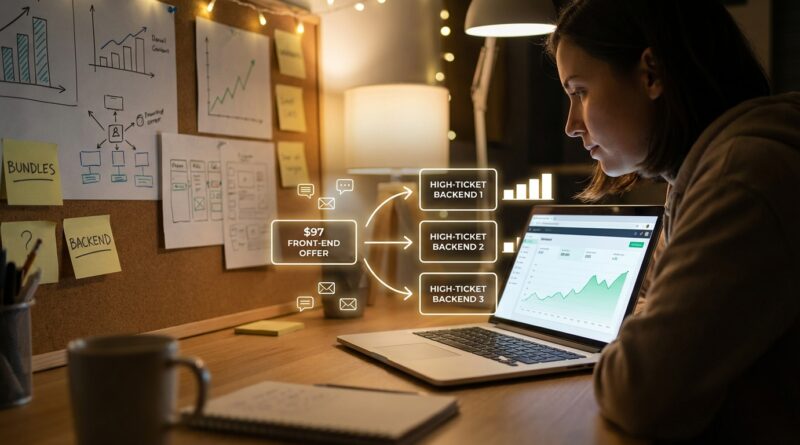
The ‘Backend Bundles’ Play: How One Creator Turned Tiny Front-End Commissions Into $11,400 In 7 Days
If you have been sending paid traffic to a high-ticket offer and watching your margin disappear, you are not imagining it. Clicks cost more. Refunds hit harder. And that exciting $800 or $1,200 commission can shrink fast when the front-end offer is weak or the conversion rate slips. That is exactly why one creator stopped treating the first sale like the whole business. Instead of relying on a single offer, they built a simple backend bundle around each new buyer. The result was $11,400 in 7 days, and most of it did not come from the first click. It came from what happened after the buyer raised their hand. The big lesson here is simple. In 2026, the money is often in the sequence, not just the sale. If you can connect a small front-end commission to a few carefully matched follow-up offers, your earnings per buyer can change fast, even if your traffic costs stay annoying.
⚡ In a Hurry? Key Takeaways
- A backend bundle turned low front-end profits into $11,400 in 7 days by monetizing buyers after the first sale.
- Start with one buyer path, then add 2 to 4 related follow-up offers that solve the next obvious problem.
- Do not stack random products. The bundle only works if each offer matches buyer intent and feels like a natural next step.
Why this worked when the front-end alone did not
A lot of affiliates are still playing a one-off game. They buy traffic, send it to one landing page, hope the offer converts, and pray the commission survives refunds. That model can still work, but it is getting harder to keep profitable.
This creator saw the same problem. Their front-end commissions were small, conversion rates were decent but not amazing, and ad costs were chewing up most of the upside. So instead of chasing a new niche or hunting for some mystery unicorn offer, they changed the structure.
They built what is basically a backend bundle. Think of it like this. The first offer gets the buyer in the door. The next few offers increase total revenue from that same person over the next several days.
The 7-day case study breakdown
The starting point
The creator was promoting a front-end offer that paid modest commissions. Not terrible. Just not enough to comfortably scale cold traffic.
Here is the simple math problem they were facing:
- Traffic costs were rising on Meta and YouTube.
- The front-end offer converted just well enough to look promising.
- The actual profit after ad spend was thin.
- Refund risk made things worse.
That is where most affiliates stop and say, “This offer is dead.” This creator did something smarter. They asked, “What else does this buyer need right after buying?”
The bundle map
The backend bundle was not a giant, complicated funnel. It was a clean sequence built around buyer intent.
A simplified version looked like this:
- Traffic goes to a front-end offer with a low barrier to entry.
- Buyer gets tagged based on what they purchased or clicked.
- Within 24 hours, they receive a follow-up offer that helps them get a result faster.
- Within 2 to 4 days, they see a second offer that solves the next bottleneck.
- High-intent buyers get a premium tool, service, or coaching-style offer at the end.
That is the whole idea. Not random upsells. A guided path.
The numbers
Over 7 days, the creator generated $11,400. The eye-catching part is that a big slice of that total came after the initial transaction.
A realistic breakdown looked something like this:
- Front-end commissions: $2,100
- First backend offer: $3,000
- Second backend offer: $2,800
- Premium backend or service-based offer: $3,500
The exact mix can vary, of course. But the pattern matters more than the precise dollar amounts. The front-end created the buyer. The backend made the campaign worth scaling.
What a backend bundle actually is
If the phrase sounds fancy, it is not. A backend bundle is simply a planned set of follow-up offers tied to one initial purchase or lead action.
For example, if someone buys a front-end training product about generating leads, the next offers might be:
- A template pack to speed up implementation
- A software tool to automate part of the process
- A done-with-you service for setup
- A higher-ticket coaching or audit offer
Each one answers the buyer’s next question. That is why it works.
Why beginners miss this
Most beginners think the game is finding the “best” high-ticket offer. That sounds logical, but it is incomplete. A great commission on paper means very little if the customer journey ends after one shaky sale.
The better question is this. What is the total value of a buyer over 7, 14, or 30 days?
That is what this high ticket affiliate marketing backend bundle case study makes clear. The creator did not need a perfect front-end. They needed a better plan for what happened next.
How the follow-up sequence was likely set up
Day 0: Front-end conversion
The first offer was positioned as the easiest entry point. Low resistance. Clear result. The goal was not to squeeze maximum commission from the first interaction. It was to create buyers.
Day 1: Quick-win offer
The first backend product helped buyers get momentum fast. This is important. People buy more when they feel progress.
Good examples include:
- Templates
- Checklists
- Toolkits
- Short implementation mini-courses
Day 3: Bottleneck solver
Once buyers start, they usually hit friction. Maybe they need traffic. Maybe they need better copy. Maybe they need automation. The second backend offer should solve that exact friction point.
Day 5 to 7: Premium path
This is where the bigger numbers can show up. By now, the most engaged buyers have self-identified. They have opened emails, clicked links, watched demos, or used part of the first product. These people are much warmer than cold traffic.
That makes a premium offer far easier to sell than trying to pitch it cold on day one.
The outreach angles that made the bundle feel natural
The creator did not hammer buyers with “buy this too” messages. The outreach was framed around progress.
That is the real trick.
Here are the kinds of angles that tend to work:
- Speed angle: “If you want this running today, here is the shortcut.”
- Mistake prevention angle: “Most people get stuck at this step. This helps avoid that.”
- Upgrade angle: “If you are serious about results, this is the next tool to add.”
- Support angle: “If you do not want to set it up alone, here is a done-with-you option.”
See the difference? It is not pushy. It is useful. It reads like advice, not a cash grab.
What made the bundle profitable
There were four big reasons.
1. Buyer intent was already proven
A buyer is worth more than a lead. Once someone pulls out a credit card, even for a smaller front-end purchase, they have crossed the hardest psychological line.
2. Each offer matched the previous one
This was not a random pile of affiliate links. The offers were connected. One solved the next problem created by the previous purchase.
3. The creator used speed
The follow-up happened quickly. Not months later when the buyer had forgotten why they were interested.
4. The premium offer was saved for warm buyers
This is a big one. Trying to sell a high-ticket solution cold is expensive. Selling it to someone who already bought and engaged is much easier.
How to build your own backend bundle in under a week
You do not need a giant team or custom software to try this.
Step 1: Pick one front-end offer that already gets some conversions
Do not overcomplicate this. If something already gets clicks and a few sales, that is enough to start. The point is not to find perfection. The point is to build around existing buyer behavior.
Step 2: List the next 3 problems a buyer will face
Ask yourself:
- What do they need to start faster?
- What will confuse them after purchase?
- What tool or service would make the result easier?
Step 3: Match 2 to 4 affiliate offers to those problems
This is where many people mess up. They choose offers based on payout instead of fit. Start with fit. If the match is good, the revenue tends to follow.
Step 4: Build a simple email or message sequence
You do not need a 30-email soap opera. A 5 to 7 message sequence can be enough.
Basic flow:
- Email 1: Welcome and quick-start help
- Email 2: Common mistake and solution
- Email 3: Tool or template recommendation
- Email 4: Case study or result story
- Email 5: Premium next step for serious buyers
Step 5: Track earnings per buyer, not just front-end ROI
This is the number that changes your thinking. If you only watch first-sale commissions, you may kill campaigns that are actually working once the backend is included.
Common mistakes to avoid
Too many offers
More is not better. If buyers feel like they walked into a gift shop full of unrelated products, trust drops fast.
Bad sequencing
Do not pitch the most expensive thing first unless the audience is already very warm. Build trust in steps.
Ignoring refunds and support issues
A backend bundle can improve earnings, but only if the offers are solid. Promoting junk just to pad commissions is a short-term move.
Sending the same message to everyone
If possible, segment by action. Buyers who clicked but did not purchase should see different follow-up than buyers who completed the first offer.
Who this strategy works best for
This setup is especially useful for:
- Affiliates buying cold traffic
- Email marketers with small but active lists
- Creators in software, business opportunity, finance, education, and productivity niches
- Anyone promoting a front-end offer that converts but does not leave enough margin
It can also help beginners because it shifts the goal from “find the perfect offer” to “build a better buyer journey.” That is usually a more stable business.
Why this matters more in 2026
Ad inventory is not getting cheaper. Attribution is still messy. And depending on the platform, your view of customer lifetime value can be incomplete at best.
That means affiliates need more control over monetization after the first click. A backend bundle gives you that control. It helps you squeeze more value from the buyers you already paid to acquire.
That is a much healthier place to be than constantly searching for a fresh traffic source or blaming the ad platform for every weak week.
At a Glance: Comparison
| Feature/Aspect | Details | Verdict |
|---|---|---|
| Front-end only strategy | Relies on one sale to cover traffic costs, refunds, and profit | Harder to scale in expensive ad markets |
| Backend bundle approach | Uses 2 to 4 related follow-up offers to increase total earnings per buyer | Stronger margins and better use of paid traffic |
| Setup complexity | Needs simple sequencing, relevant offer matching, and basic tracking | Very doable within a week if kept simple |
Conclusion
Most affiliates are obsessing over finding the next magical high-ticket program while ignoring the real lever in 2026. It is how you package and sequence multiple offers around a single buyer, not just the first click. That is what this backend bundle case study really shows. One creator took tiny front-end commissions and turned them into $11,400 in 7 days by building a smarter path after the first sale. No niche change. No desperate platform jump. No waiting for better attribution tools. Just a clear sequence, relevant offers, and follow-up that made sense. If your paid traffic is getting squeezed on Meta, TikTok, or YouTube, this is one of the most practical fixes you can test right now. Start small. Pick one offer. Add the next logical step. Then another. You do not need a perfect funnel. You need a buyer journey that makes the first sale the beginning, not the end.