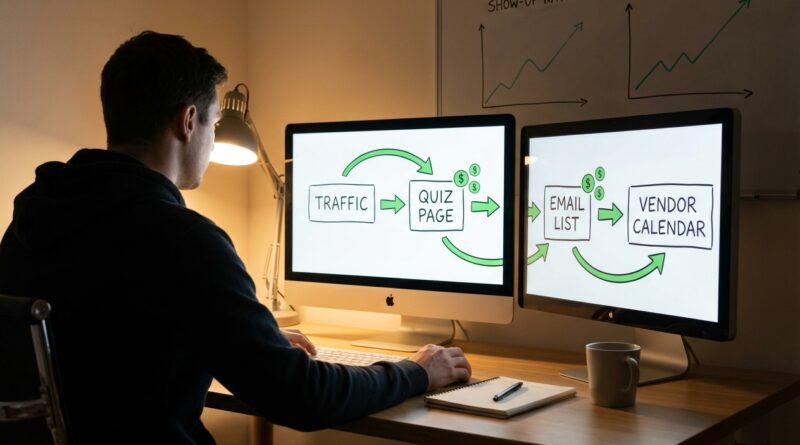
The ‘Call Funnel Arbitrage’ Play: How One Solo Affiliate Turned Vendor Calendars Into A High‑Ticket Lead Machine
You can spend real money sending warm prospects to a high-ticket vendor, watch them book calls, and still end the month feeling like you got mugged by a calendar link. That frustration is real. You paid for the click. You created the intent. Then the lead disappears into someone else’s booking page, someone else’s CRM, and someone else’s sales process. If the rep is slow, the reminders are weak, or tracking breaks, you are the one left staring at ad costs and a vague promise that “the numbers will be reconciled later.” This high ticket affiliate case study controlling vendor call funnels shows a smarter way. One solo affiliate stopped handing traffic straight to vendors, built a simple pre-booking funnel on their own pages, captured first-party data before the handoff, and used the vendor only for closing. The result was better visibility, cleaner follow-up, more retargeting options, and far less dependence on a vendor’s honesty or competence.
⚡ In a Hurry? Key Takeaways
- Sending paid traffic straight to a vendor calendar is often where high-ticket affiliate profit quietly leaks out.
- Start with a pre-booking page and form on your own domain so you collect the lead data before the vendor ever sees it.
- This setup is not about being sneaky. It is about protecting tracking, improving follow-up, and building an asset you still own if the offer changes.
The old play that keeps burning affiliates
The usual setup sounds simple. Run ads. Send traffic to a webinar, VSL, or quiz. Push people into the vendor’s calendar. Wait for calls to happen. Collect commissions.
On paper, fine. In practice, messy.
The weak spots show up fast. Prospects book but do not show. Calendars have gaps. Sales reps call late. Automated reminders are poor. Tracking gets fuzzy once the lead enters the vendor’s system. Then payouts arrive with missing rows and no clean explanation.
That is the core problem. You carry the front-end risk, but the vendor controls the buyer relationship once the handoff happens.
What this solo affiliate changed
The affiliate in this case study did not build some giant enterprise system. No huge team. No custom app. Just a cleaner funnel that put the most valuable step, lead capture, under their own control.
The simple switch
Instead of sending traffic directly to the vendor calendar, they sent traffic to their own landing page first.
That page did three jobs:
- Pre-qualified the visitor with a stronger message and clearer expectations.
- Collected first-party data, name, email, phone, source, and interest tags.
- Sent only qualified leads to the vendor booking page or to a scheduling step embedded after the form.
That one change matters more than it sounds.
Why it worked
Before, the affiliate was buying clicks and hoping the vendor was good at the rest.
After, they owned the top of the funnel. They knew who clicked, who opted in, who started booking, who booked, and who needed reminders. Even if the vendor closed the sale, the affiliate still had the lead data, the retargeting audience, and a follow-up path.
The new funnel, step by step
Here is the structure they used.
1. Ad to pre-sell page
The ad did not promise a vague “free consultation.” It framed the problem in plain language and called out who the offer was for.
This improved lead quality right away. People who were just curious bounced early. Good. That saved money.
2. Short application or lead form
Next came a simple form. Nothing fancy. Basic contact info plus a few qualifying questions.
Examples:
- What are you trying to solve right now?
- How soon are you looking to start?
- What tool or service are you using today?
- What is your rough monthly budget or revenue range?
This did two things. It filtered out weak leads, and it gave the affiliate useful segmentation data for follow-up.
3. Thank-you page with next action
Once the lead submitted the form, the affiliate pushed them to the next step. Depending on the vendor setup, that was either:
- a direct link to the vendor calendar with tracking parameters attached, or
- a bridge page that explained what would happen on the call and why booking now mattered
That bridge page can do a lot of quiet work. It can increase show-up rates by setting expectations. It can answer common objections. It can explain who should not book. All of that helps the closer on the other end.
4. Affiliate-owned reminder sequence
This is where the gains often show up.
The affiliate set up email and SMS reminders from their own system. Not instead of the vendor’s reminders. In addition to them. If the vendor had weak follow-up, the lead still got nudged. If the vendor had great follow-up, even better.
Simple reminders like these can lift attendance:
- Your booking is confirmed. Here is what to have ready.
- Here is the one mistake most people make before this call.
- Your call is tomorrow. If you need to reschedule, do it here.
- Your call is in one hour. Please join from a quiet place.
The part most affiliates miss: first-party data is the real asset
A lot of affiliates still think the offer is the asset. It is not. The audience and the intent data are the asset.
If a vendor changes terms, drops commission rates, closes the program, or starts underreporting, what do you have left if all you ever did was send traffic to their calendar?
Usually, nothing.
By contrast, this affiliate now had:
- an email list of interested buyers
- phone numbers for reminder and follow-up campaigns
- qualification data for future offers
- retargeting audiences built from real intent
- a funnel that could be swapped to another vendor if needed
That is the bigger win. The funnel stopped being tied to one company’s back-end behavior.
What happened after the switch
The affiliate tested this on a slice of traffic first, not the whole budget. Smart move.
What changed was not magic. It was basic control.
Show-up rates improved
Leads got clearer pre-sell messaging and stronger reminders. Fewer low-intent prospects booked just to browse.
Tracking got cleaner
Because the affiliate captured the lead before the handoff, they had their own timestamp, source data, and record of intent. If a vendor report looked off, they had something concrete to compare it against.
Retargeting got much better
People who started the form but did not finish could be retargeted. People who opted in but did not book could be nudged back. People who booked but did not buy could later be shown a related offer.
Negotiating power improved
This is a quiet benefit, but a very real one. When you can show a vendor how many qualified leads you generated and how many reached the booking step, you are no longer just “some affiliate asking about missing commissions.” You have receipts.
How to build this in a weekend
You do not need a giant stack. Most people can start with tools they already use.
Minimum setup
- A landing page builder on your own domain
- A form tool or CRM
- Email automation
- Optional SMS reminders
- UTM tracking and hidden fields for source capture
Your must-have fields
- Name
- Phone
- Offer or campaign name
- Traffic source
- Ad or keyword tag
- Qualification answers
Keep it simple. If the form feels like a mortgage application, completion rates will drop.
Your must-have pages
- Pre-sell landing page
- Application or lead form page
- Thank-you or bridge page
- Optional no-book retargeting page
Best practices if you do not want this to backfire
This kind of setup works best when you use it cleanly and openly.
Do not hide the handoff
Tell people they are being connected with a provider or specialist. Clear expectations build trust.
Do not spam your reminders
Helpful beats relentless. A few smart reminders are enough.
Do not overcomplicate attribution
Use consistent tags. Save the click source. Record timestamps. Make sure your own CRM and your ad platform can be matched later.
Do not assume every vendor deserves your best traffic
Run a small test. Compare booked calls, show rates, close rates if available, and payout reliability. Some vendors look great on a sales page and terrible inside their call process.
When this play makes the most sense
This works especially well for affiliates promoting:
- high-ticket SaaS with demos or strategy calls
- coaching and consulting programs
- agency services
- B2B software with sales-assisted conversion
- education offers with enrollment calls
If the sale depends on a calendar and a closer, you should at least test owning the pre-booking step.
When you might keep the vendor calendar direct
There are exceptions.
If the vendor has excellent reporting, fast follow-up, clear CRM visibility, strong show rates, and a history of accurate payouts, a direct send can still make sense. But be honest. Those vendors are rarer than the marketing world likes to admit.
The bigger lesson
This is not just a funnel trick. It is a mindset change.
The affiliate stopped acting like a traffic renter and started acting like a publisher with an owned audience path. That one decision changed the economics of the campaign.
Instead of paying to fill somebody else’s pipeline, they built a front-end system they could reuse across offers. If one vendor failed, the asset still stood.
At a Glance: Comparison
| Feature/Aspect | Details | Verdict |
|---|---|---|
| Direct to vendor calendar | Fast to launch, but the vendor controls the booking, reminders, CRM data, and much of the attribution after the click. | Easy, but risky if you are buying traffic. |
| Affiliate-owned pre-booking funnel | Adds one extra step, but captures first-party data, improves qualification, and gives you your own follow-up path. | Better long-term control and stronger reporting. |
| Using vendor only as closer | You still benefit from the vendor’s sales team, but only after the lead is already in your system and tagged. | Often the smartest middle ground for high-ticket offers. |
Conclusion
If you have ever felt blind after sending a prospect into a vendor’s call funnel, you are not imagining the problem. Calendar leakage is one of the biggest quiet issues in high-ticket affiliate marketing right now. Affiliates pay for traffic, show-up rates slip, tracking gets messy, and missing commissions somehow become a debate instead of a report. This case study shows a practical fix. Own the top of the funnel. Collect the lead before the handoff. Add your own reminders. Track every step you can. Then let the vendor do what they are supposed to do, which is close. That simple shift can turn a fragile campaign into a more durable business asset. For creators already sending decent traffic to SaaS, coaching, or service offers, this is the kind of test you can start over a weekend on a small traffic slice. You do not need to rebuild everything. You just need to stop subsidizing someone else’s brand with your best leads.