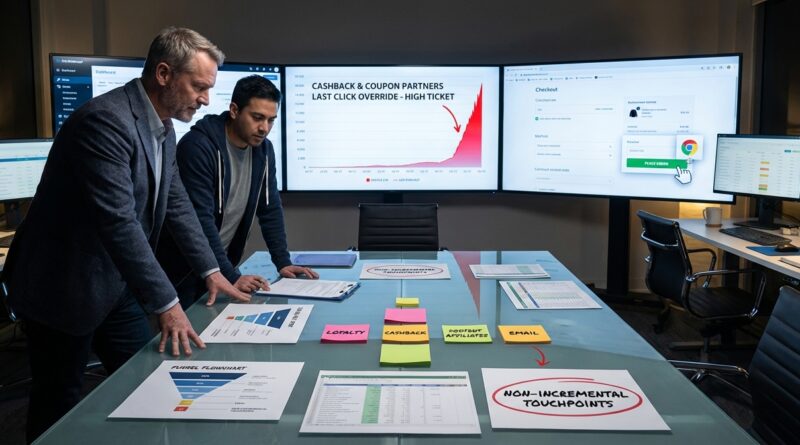
The Cashback Squeeze: Are Loyalty And Coupon Sites Quietly Taxing Your High‑Ticket Affiliate Profits?
You close a sale worth $2,000, think everyone is happy, then the commission goes to a cashback site that showed up at the checkout page. If you run high ticket affiliate offers, that sting is real. It is frustrating for brands because they end up paying for sales they were probably going to get anyway. It is just as frustrating for the content creators, review sites, email partners, and paid media affiliates who did the hard work of warming up the buyer. Their EPC drops, their numbers look worse than they should, and many quietly stop promoting the offer. That is the cashback squeeze. It often hides inside last click attribution, browser coupon extensions, and loyalty partners that add little true lift. The good news is this is fixable. If you understand loyalty and cashback partners affiliate marketing incrementality, you can spot who is really adding value, cut waste, and protect the affiliates who are actually driving revenue.
⚡ In a Hurry? Key Takeaways
- Loyalty, cashback, and coupon partners often capture last click credit on sales that were already won by another affiliate.
- Audit click timing, coupon usage, new-to-file rate, and checkout-page touchpoints, then cap or change payouts for non-incremental partners.
- Done properly, this protects your best affiliates, cuts wasted commission spend, and improves program health without killing useful partnerships.
The real problem is not loyalty sites. It is bad attribution.
Loyalty and cashback sites are not automatically bad partners. Some do bring fresh shoppers. Some can help move fence-sitters. The trouble starts when they get paid the same way as a creator who introduced the customer, educated them, and convinced them to buy.
On high ticket products, that mismatch gets expensive fast. A single commission might be worth hundreds or even thousands. If a browser extension pops up with “Try coupons” right before payment, and your program gives full credit to the last affiliate click, the wrong partner can get rewarded.
That means two losses at once. The brand overpays. The true driving affiliate sees weaker earnings per click and starts sending traffic somewhere else.
Why high ticket programs get hit harder
This problem exists in many affiliate programs, but high ticket offers feel it more sharply for three simple reasons.
1. The commission amounts are big
If you are paying 10 percent on a $3,000 sale, that is a $300 commission. Giving that to a checkout interceptor instead of the real closer is not a rounding error. It is a budget problem.
2. The buyer journey is longer
People do not usually impulse buy expensive products. They read reviews, watch videos, compare options, ask questions, then come back later to purchase. That gives coupon sites and cashback tools more chances to sneak in at the very end.
3. Your best affiliates notice quickly
Experienced affiliates track EPC, conversion rate, reversal rate, and average commission. If those numbers slip because another partner keeps taking last click, they do not always complain. They just leave.
What non-incremental means in plain English
Incrementality is just a fancy way of asking one practical question. Would this sale have happened anyway without this partner?
That is the heart of loyalty and cashback partners affiliate marketing incrementality. If a cashback partner truly introduced the shopper or genuinely changed the decision, fair enough. Pay them. If they only appeared after the customer had already decided to buy, the commission is acting more like a tax on your program than a reward for new business.
Think of it like this. If someone brings a friend to your shop, they helped. If they simply stand by the till and shout “Use this code” to a customer already reaching for their wallet, that is a different kind of contribution.
How the commission theft usually happens
Most brands do not set out to overpay. They inherit default network settings, keep broad partner terms, and rely on last click because it is simple.
Here are the common ways value gets siphoned away:
Coupon extensions at checkout
The shopper is already on your payment page. A browser extension opens, checks for coupon codes, and drops an affiliate click. That can overwrite the earlier referring affiliate.
Cashback site “activation” clicks
The buyer searches your brand name plus “cashback” or “discount” moments before purchase, clicks through a loyalty portal, and the portal gets credit for a sale that was already nearly closed.
Trademark and brand intent harvesting
Some partners benefit mainly from shoppers already looking for your brand, not from building demand upstream.
Voucher pages with expired or generic offers
These pages may rank for your brand plus coupon terms and catch buyers at the bottom of the funnel without creating real demand.
Signs your loyalty and cashback partners are cannibalising sales
You do not need a giant data science team to spot trouble. Start with patterns.
Very short click-to-sale times
If a partner gets lots of conversions within a few seconds or minutes of the click, that usually means they are appearing at the very end of the journey.
High conversion rates that look too good
A partner converting at an unbelievably high rate may not be magical. They may just be skimming demand you already paid someone else to create.
Low new customer rates
If most attributed sales are from existing customers or obvious brand search traffic, ask how much new demand the partner is really adding.
Heavy overlap with creator-driven journeys
Look at paths where an influencer, reviewer, or content affiliate touched the customer earlier, then a cashback or coupon click appeared right before checkout.
Affiliate complaints about dropping EPC
Your top partners often spot this before your reporting does. If good affiliates say they are losing conversions at the last minute, listen.
A simple audit playbook that actually works
You do not need perfect attribution to improve this. You just need a better filter.
Step 1. Pull a path-to-conversion report
Look beyond the winner of the last click. Review the full order path for at least 30 to 90 days. Focus on expensive orders first.
Step 2. Segment partner types
Group affiliates into buckets. Content creators. Review sites. Email partners. Paid media affiliates. Loyalty and cashback sites. Coupon and extension partners. This makes patterns easier to see.
Step 3. Check click timing
Measure how often each partner appears within the last 5 minutes, 30 minutes, or 24 hours before sale. If a cashback partner lives almost entirely in the last few minutes, be cautious.
Step 4. Review customer intent
Was the customer already on the checkout page? Did they use a coupon field? Did they come via brand search? Those clues matter.
Step 5. Compare assisted value versus closed value
Some affiliates introduce buyers early. Others close. Some do both. You want to know whether the final click actually changed the outcome or simply captured it.
Step 6. Test exclusions
Run a controlled test. Exclude one or two suspect partners from specific product lines, geographies, or checkout stages. Then compare total sales, conversion rate, and affiliate mix. If revenue stays flat while commission cost drops, you have your answer.
How to fix it without burning the whole channel down
You do not need to ban every cashback or loyalty partner. The smarter move is to match payout to true value.
Use different commission rates by partner type
A top-of-funnel creator who introduces a new customer should not always be paid the same as a late-stage loyalty click. Lower rates for low-intent partners can protect margin.
Set attribution rules around checkout-page clicks
If a click happens after the shopper reaches cart or checkout, you may choose to reduce commission, block attribution, or require a valid incrementality test.
Remove commission on coupon extension interceptions
If the extension merely inserts a code at checkout, many brands decide that does not deserve full credit.
Pay bonuses for true new customer acquisition
This is one of the cleanest fixes. Reward partners more when they bring new customers, less when they capture existing demand.
Use assist or shared credit models where possible
If your setup allows it, split value between introducers and closers instead of treating the final click as the whole story.
Cap payout on branded coupon traffic
If a shopper is already searching your brand plus “discount,” the affiliate likely is not doing the heavy lifting. A lower or fixed payout often makes more sense.
What to say when renegotiating with loyalty and cashback partners
This does not need to be a fight. Keep it factual.
Show the click timing. Show overlap with creator journeys. Show whether the partner is bringing new customers or mostly intercepting branded traffic. Then propose new terms.
For example:
- Lower commission on existing customers
- No payout when the click occurs after checkout begins
- Tiered rates based on new-to-file sales
- Flat fees for placement instead of open-ended CPA on some campaigns
- Commission only on approved coupon codes or exclusive offers
Good partners will usually understand that high ticket programs cannot keep paying premium commissions for low-lift activity.
How to protect your best affiliates before they walk
This part matters just as much as reducing waste.
Tell them you are cleaning up attribution
Your strongest affiliates want to know you are paying attention. A short note that you are reviewing coupon and cashback cannibalisation can rebuild trust quickly.
Offer private terms for proven value
If a partner consistently drives first-touch traffic or long-consideration conversions, consider stronger rates, longer cookie windows, or hybrid deals.
Share better reporting
Even basic transparency helps. If affiliates can see that you understand where their contribution sits in the buying journey, they are more likely to stick.
Watch EPC after making changes
If you fix the squeeze properly, your top affiliates should see healthier performance. That is a strong sign you are paying the right people again.
A good rule of thumb for brands
Ask this simple question for every loyalty, cashback, and coupon partner. Are we paying them for influence, or just for proximity to the checkout button?
If it is the second one, the partnership may still have some value, but it should not be rewarded like true demand creation.
At a Glance: Comparison
| Feature/Aspect | Details | Verdict |
|---|---|---|
| Last-click loyalty or cashback partner | Often appears minutes before purchase, especially on branded or checkout-stage traffic. | Useful sometimes, but often overpaid if given full commission. |
| Content or review affiliate | Introduces the offer earlier, educates the buyer, and drives consideration over a longer period. | Usually more incremental and worth protecting in high ticket programs. |
| Reworked attribution and payout rules | Uses click timing, customer type, and checkout position to decide who gets paid and how much. | Best long-term fix for margin protection and affiliate trust. |
Conclusion
More brands are finally seeing what has been hiding in plain sight. Low-intent coupon, loyalty, and cashback partners can cannibalise sales that high-value affiliates already closed, and the damage is bigger on high ticket offers where one commission can be worth serious money. The answer is not panic and it is not a blanket ban. It is a clear playbook. Check who appears late in the journey. Measure new customer value. Test incrementality. Renegotiate weak partnerships. Set smarter payout rules. When you do that, everybody important wins. Brands stop overpaying. Top-tier affiliates stop silently subsidising coupon extensions and checkout interceptors. And your affiliate program starts rewarding real influence again, not just whoever happened to be standing closest to the receipt.