The ‘No Content’ Case Study: How One High‑Ticket Affiliate Turned Existing SaaS Traffic Into $7k Recurring In 30 Days
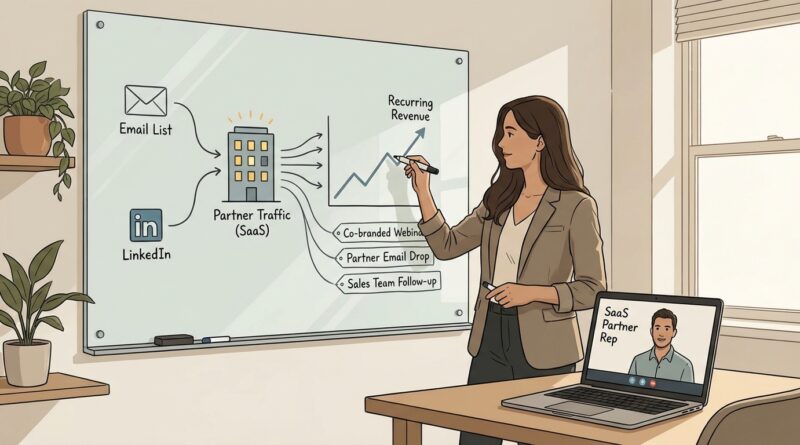
You do not need more content. That is the part many tired affiliates need to hear. If you have been grinding through posts, funnels, lead magnets, and social updates only to make a few scattered commissions, the problem may not be traffic at all. It may be the model. One high-ticket affiliate recently turned existing SaaS traffic into $7,000 in recurring monthly commissions in 30 days without building a big content engine, without paid ads, and without a complicated funnel. The trick was simple. Instead of trying to become a full-time media company, they plugged into a SaaS company that already had a sales team, webinar assets, email capacity, and a product with healthy recurring revenue. They brought a warm audience and buyer intent. The partner did much of the selling. This high ticket saas affiliate marketing case study matters because it shows what happens when you stop asking, “How do I get more clicks?” and start asking, “Where is there already momentum I can join?”
⚡ In a Hurry? Key Takeaways
- You can build a meaningful recurring income stream from a small warm audience if the SaaS partner already has strong sales systems and high customer value.
- Start by asking about average deal size, churn, onboarding, close rates, and whether they will co-host webinars or run email drops for your audience.
- Do not chase shiny payouts alone. A lower headline commission with low churn and real partner support is usually worth more than a flashy offer that leaks customers.
The Case Study in Plain English
Here is the short version.
A mid-level affiliate had a decent but not massive audience. Think a small email list, some LinkedIn reach, and credibility in a niche where software buyers already existed. They were not famous. They were not posting five times a day. They were simply trusted by the right people.
Instead of promoting a low-ticket tool with a weak trial-to-paid conversion rate, they picked a high-ticket SaaS product with recurring commissions, a sales team, and a company willing to work with partners. Then they did three things.
1. They chose a product with real economics
Not just a high monthly price. Real economics. The SaaS company had healthy customer lifetime value, low enough churn to make recurring commissions stick, and an offer strong enough that a sales call could close the deal.
2. They brought warm intent, not mass traffic
They invited their audience to a partner-hosted webinar and sent a few focused emails. No huge launch. No giant funnel. Just a clean message to people who already trusted them.
3. They let the SaaS team do the heavy lifting
The company handled demos, follow-up, sales calls, and onboarding. The affiliate stayed in the expert role. That is a much easier job than trying to be media buyer, copywriter, closer, and customer support all at once.
Within 30 days, the result was about $7,000 in recurring monthly commissions from deals that were good fits. Not jackpot money overnight. Better than that. Predictable money with a path to grow.
Why This Worked When “More Content” Usually Doesn’t
Most affiliates are taught to think like publishers. More traffic. More posts. More lead magnets. More split tests. That can work, but it is exhausting, and it often takes a long time to pay off.
This model works because it starts closer to the sale.
The audience was already warm. The product solved a real business problem. The SaaS company already had systems in place. So the affiliate did not need to create demand from scratch. They just needed to direct existing trust toward an offer with strong sales support.
That is the big shift. You are not trying to build the whole machine. You are joining one that already runs.
How to Spot a SaaS Partner Worth Your Time
This is where most people either win or waste a month.
A promising partner is not just a company with an affiliate page and a nice commission percentage. You want a business that understands its numbers and is set up to help you close deals.
Ask these questions before you promote anything
What is the average monthly contract value?
If the tool costs $49 a month, it may still be useful, but it is not really high-ticket. If deals land in the few hundred to few thousand per month range, now you are in more interesting territory.
What does customer lifetime value look like?
A recurring commission is only exciting if customers stick around. A product with strong retention can beat a higher commission on a product customers cancel after 45 days.
What is your churn rate?
Ask directly. Monthly churn matters. Annual churn matters too. If they dodge the question, that tells you something.
How do trials convert to paid?
You want to know whether the product sells itself, needs a demo, or depends on active follow-up from their team.
Do you have a sales team?
This is huge. If your traffic leads to booked demos and their closers handle the rest, your job gets much easier.
What support do partners get?
Can they co-host a webinar? Give you a custom landing page? Provide sales collateral? Run an email drop to their list featuring you as the expert? These things matter.
Can we discuss sourced deal attribution?
Sometimes the best setup is not a generic affiliate link. It is a tracked webinar, custom form, booked-call flow, or agreed revenue share on deals you originate.
The Simple 30-Day Playbook
If you are a mid-level affiliate with a warm but small audience, this is the part you can actually use.
Week 1: Pick the right partner
Make a shortlist of 5 to 10 SaaS or AI tools in your niche. Focus on products that have one or more of these signs:
- They recently launched or refreshed an affiliate or partner program
- They sell to businesses, agencies, consultants, or teams
- They have recurring pricing with room for meaningful commissions
- They already run demos, onboarding, or account management
- There are not many serious affiliates talking about them yet
Then reach out like a professional, not like someone begging for a link. Tell them who your audience is, what problem you help solve, and that you are interested in a partner-led campaign if the numbers make sense.
Week 2: Negotiate the structure
This part makes a real difference.
Do not just ask, “What is your commission rate?” Ask how partner-generated deals are tracked, what counts as an originated sale, whether webinar attendees can be tagged, and whether there is room for a better share based on the type of buyers you bring.
You can ask for things like:
- A higher recurring percentage for sourced deals
- A flat bounty plus recurring share
- Extended attribution windows
- Custom landing pages
- Partner-hosted webinar support
- Sales rep follow-up for your leads within a set timeframe
If they believe in their numbers, they are often open to a serious conversation.
Week 3: Run one focused event or campaign
This is where the “no content” angle really shows up.
You do not need a six-week launch. You need one clean campaign. For most affiliates, the best option is a webinar, workshop, live demo, or short expert session tied to a problem your audience already wants fixed.
Example angle: not “Come see this software.”
Better angle: “How agencies are cutting onboarding time by 40 percent,” or “The AI workflow teams are using to respond faster without hiring more staff.”
You are teaching. The SaaS partner is supporting. Their team can present part of the demo, answer technical questions, and handle follow-up calls.
Week 4: Follow up and let the sales team sell
After the event, send simple follow-up emails.
- Email 1: Replay and top takeaway
- Email 2: Best fit for this tool
- Email 3: Case example or objection handling
- Email 4: Deadline or bonus if appropriate
Meanwhile, their team should be booking demos, answering objections, and closing qualified buyers. You stay visible, but you do not need to force the whole sale yourself.
What the Numbers Often Look Like
Let’s make this concrete.
Say you have 2,000 email subscribers or a few thousand LinkedIn followers in a business niche. Not huge. You invite them to a useful webinar. A modest turnout of 80 to 120 registrants is possible if the topic is sharp and relevant.
From there, maybe 20 to 30 people are strong fits. Perhaps 10 to 15 book demos. If the SaaS team closes 3 to 5 deals at a few hundred to a few thousand in monthly value, your recurring share can become meaningful very fast.
That is the point of this high ticket saas affiliate marketing case study. The math changes when the product value, retention, and sales support are all stronger. You do not need a giant audience to get a grown-up result.
Where Affiliates Usually Mess This Up
There are a few traps here, and they are common.
Picking the hottest product instead of the best partner
A shiny AI tool with a big payout can still be a bad bet if onboarding is messy, churn is high, or support is weak.
Promoting before understanding the customer
If you cannot explain who should buy, who should not, and what pain it solves, your campaign will feel vague. Vague does not sell.
Sending clicks instead of creating buying context
A generic affiliate link is easy, but it often underperforms. A webinar, custom landing page, or direct introduction gives the buyer a reason to trust the next step.
Ignoring attribution details
This one hurts. If a lead attends your webinar, talks to their team two weeks later, and buys through a direct sales call, how is that tracked? Get this clear before launch.
How to Negotiate Without Feeling Awkward
A lot of affiliates get nervous here. They think negotiation is only for giant creators. It is not.
If you bring qualified buyers, you have value. The key is to talk in business terms.
Try language like this:
“My audience is small but specific. If we run a partner-led webinar and I generate booked demos, I would like to discuss a sourced-deal arrangement, not just a standard click-based affiliate payout.”
That tells them you understand the difference between random traffic and actual pipeline.
You can also ask:
- “What close rate do you typically see from partner-generated demos?”
- “What churn do these accounts have compared with your average?”
- “Can we set up a review after the first campaign and adjust terms if lead quality is strong?”
Good companies will respect these questions.
Why Partner-Hosted Webinars Work So Well
Because they solve three problems at once.
First, they give your audience a useful event, not just a sales pitch. Second, they let the SaaS team answer detailed questions you may not want to own. Third, they position you as the trusted guide while their team handles the product-heavy parts.
It is one of the easiest ways to look more established without creating a mountain of new content.
And unlike an endless social posting schedule, a webinar has a clear start, finish, and follow-up window. That makes it practical.
What to Look for in Recurring Revenue Quality
Not all recurring commission is created equal.
You want recurring revenue that has:
- Low early churn
- Clear onboarding steps
- A product that becomes more valuable after setup
- Real use inside a business workflow
- Upsell potential without customer resentment
A tool that gets embedded into daily operations tends to stick. A novelty tool often does not. That is why the best affiliate opportunities can look boring at first glance. Boring software that solves an expensive problem can be extremely profitable.
A Good Litmus Test Before You Send a Single Email
Ask yourself one question.
If I brought 20 qualified buyers into this company next month, would they know what to do with them?
If the answer is no, keep looking.
You are not searching for a logo to put in your newsletter. You are searching for a partner with a real conversion system.
At a Glance: Comparison
| Feature/Aspect | Details | Verdict |
|---|---|---|
| Traffic Strategy | Uses an existing warm audience through webinars, email drops, and direct partner campaigns instead of endless new content creation. | Best for affiliates with trust but limited scale. |
| Offer Quality | High-ticket SaaS with recurring payouts, strong lifetime value, low enough churn, and a product that solves an expensive business problem. | More important than the raw commission percentage. |
| Sales Execution | The SaaS partner handles demos, follow-up, and closing, while the affiliate stays in the expert and introducer role. | This is what makes the model scalable and less exhausting. |
Conclusion
If you have been feeling like your audience is too small, this should be a relief. A small warm audience can beat a big cold one when the offer is right and the partner knows how to sell. Right now there is a wave of high-ticket SaaS and AI tools rolling out or refreshing affiliate programs, and many of them still have very little serious creator competition. That creates an opening. The real opportunity is not just getting more clicks. It is finding companies with existing traffic and sales systems, asking smart questions about lifetime value and churn, negotiating fair revenue share on the deals you help create, and using partner-hosted webinars or email drops to put your audience in front of a real solution. If you do that well, you do not need to gamble on ads or build a giant funnel from scratch. You just need one strong partner, one useful campaign, and a clear path from trust to sale. For many mid-level affiliates, that is enough to add one meaningful recurring income stream in the next 30 days.