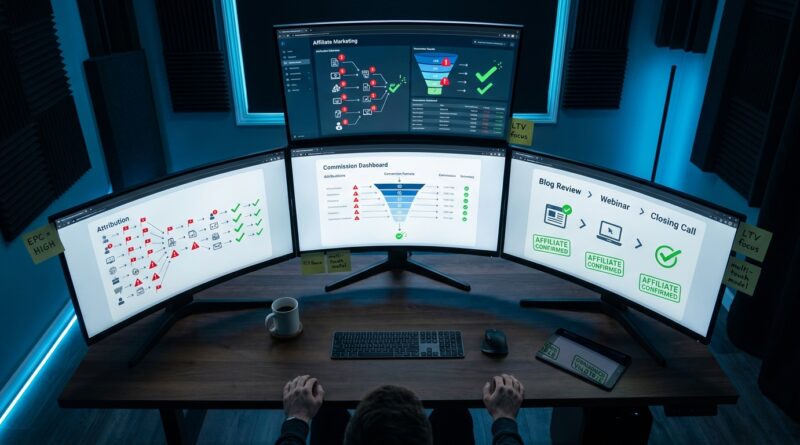
The Attribution Squeeze: How Broken Tracking Quietly Kills High‑Ticket Affiliate Deals (And What Top Partners Are Fixing First)
You feel this one in your gut. A $1,200 commission should hit. The lead was yours. The buyer came through your webinar, your email sequence, your call booking page. Then the network report shows nothing, or worse, it shows a different partner got credit because a coupon extension popped up at checkout or the merchant’s pixel fired late and dropped the trail. That is the attribution squeeze. It does not look dramatic from the outside, but it quietly eats high-ticket affiliate revenue every week. The frustrating part is not just losing money. It is knowing you influenced the sale and having no clean way to prove it. In 2026, that gap is separating serious partners from everyone else. The winners are not guessing. They are using better tracking setups, better reporting habits, and better deal terms so fewer $1,000-plus commissions disappear into “last-click” fog.
⚡ In a Hurry? Key Takeaways
- Broken last-click tracking is one of the biggest reasons high-ticket affiliates lose valid commissions in 2026.
- Start with three fixes first: longer attribution windows, post-purchase validation, and written rules on coupon and creator overrides.
- If you cannot verify your touchpoints outside the network dashboard, your EPC can shrink without you noticing until it is too late.
Why high-ticket affiliates are getting squeezed
Low-ticket affiliate mistakes are annoying. High-ticket mistakes are expensive.
When your average payout is $20, a messy tracking setup is a nuisance. When your payout is $1,000, $2,500, or more, a single broken customer journey can wipe out a week of work.
The squeeze usually comes from a mix of three things.
1. Coupon hijacks at the finish line
A buyer clicks your content, joins the funnel, gets sold over days or weeks, then grabs a browser coupon extension at checkout. Suddenly the last click belongs to a coupon partner that did not create the demand.
You did the heavy lifting. Someone else gets paid.
2. Last-click chaos across long funnels
High-ticket offers rarely convert in one session. Buyers watch demos, compare vendors, ask their team, then come back through email, retargeting, YouTube, review sites, and creator clips. If the program only pays on the very last touch, your role can vanish from the record.
3. Half-working pixels and delayed reporting
This is more common than many merchants admit. Thank-you pages load slowly. CRM events do not sync with the affiliate platform. Offline sales teams close deals that never pass back the affiliate ID. Refund and clawback rules get applied weeks later without a clear audit trail.
From the affiliate side, it feels random. It usually is not random. It is bad plumbing.
What “clean attribution” actually looks like in 2026
Clean attribution does not mean perfect attribution. That does not exist. It means you can reasonably show that your traffic, content, or list touched the sale, and the merchant has systems that preserve that evidence instead of erasing it.
A solid setup in 2026 usually has these parts:
- First-party click tracking instead of relying only on third-party cookies
- Long enough attribution windows for real buying cycles, often 30 to 90 days for high-ticket offers
- Sub-ID tracking by source, ad, funnel step, email, or creator placement
- Server-side or CRM-based postback confirmation when a sale closes
- Rules for coupon partners, creator platforms, and deal sites so they do not overwrite full-funnel partners unfairly
- Post-purchase reconciliation, especially when calls, demos, or sales reps are involved
If one of those is missing, revenue can leak. If three are missing, you are probably underpaid already.
A simple case study: how one partner found missing commissions
Let’s make this real.
An affiliate promoting a B2B software offer was sending warm leads from a niche email list and private webinar replay page. Payouts were worth $1,500 per closed annual plan. The network dashboard showed a drop in conversion rate over two months, even though booked demos stayed healthy.
At first, the affiliate assumed the offer was getting weaker. That happens. But they checked their own funnel data.
What they compared
- Unique clicks from email and webinar replay links
- Booked demo forms with a hidden affiliate sub-ID field
- Follow-up emails from the merchant’s sales team
- Closed-won deals reported back by the network
The mismatch was ugly. Around 18 percent of demo bookings tied to their traffic never appeared in attributed closed sales, even though several buyers later told them on calls, “We came through your training.”
What was broken
The merchant’s affiliate platform only awarded credit on the final web session before purchase. But many sales closed after a rep sent a direct invoice link or a checkout page that did not preserve the affiliate identifier.
In plain English, the closer the deal got to the money, the more likely the tracking disappeared.
What they fixed first
- Added a CRM field that stored the original affiliate click ID at lead creation
- Required that the affiliate ID pass into the deal record through the sales pipeline
- Set a rule that invoice-based closes still paid the original partner if the first qualified lead came through their link inside the attribution window
- Created a weekly reconciliation report between the CRM and network data
Within six weeks, “conversion rate” on paper improved, but what really changed was the accuracy. Several missing deals were recovered. More important, future leakage slowed down.
That is what a real high ticket affiliate marketing attribution tracking case study 2026 looks like. Not flashy dashboards. Better record-keeping where deals actually close.
The first fixes top partners are making
Ask for attribution rules before you send serious traffic
If you are about to put paid traffic, webinars, or a strong email asset behind an offer, ask blunt questions.
- Is this first-click, last-click, or multi-touch?
- How are coupon partners handled?
- Do creator marketplace placements override existing affiliate cookies?
- What happens when a sales rep closes the deal offline?
- How long is the cookie or attribution window?
- Can closed deals be reconciled against CRM data?
If the affiliate manager answers vaguely, that is information too.
Use sub-IDs like your income depends on it, because it does
Do not just send one generic tracking link everywhere. Break out traffic by channel and touchpoint.
Examples:
- Email welcome sequence
- Webinar replay page
- YouTube description
- Private community post
- Retargeting ad campaign
When commissions go missing, sub-IDs help you spot where the handoff broke.
Push for post-purchase validation
This matters most on high-ticket deals with a sales call, application, or invoice step.
You want some way to match click data to final revenue after the sale, not just at the browser level in the moment. That can mean CRM syncing, server-side postbacks, or even a monthly closed-deal export reviewed with top partners.
Block coupon poaching in the contract
This sounds boring. It saves money.
Add terms that say coupon or loyalty affiliates cannot overwrite a tracked referral if they only appear at checkout without introducing the buyer. Some programs already do this. Many still do not.
If you are driving serious volume, ask for it in writing.
Watch clawbacks like a hawk
Not every clawback is wrong. Refunds happen. Fraud happens. But if clawbacks rise while your front-end lead quality stays stable, dig in.
Ask for reasons grouped by category:
- Refund
- Duplicate
- Tracking error
- Unqualified lead
- Payment failure
“Adjustment” is not a reason. It is a fog machine.
The quiet split in the industry
Right now there are really two groups of affiliates.
The first group can verify what they touched. They keep their own click logs, use sub-IDs, compare network numbers against funnel events, and work with programs that can reconcile data when needed.
The second group trusts the dashboard and hopes for the best.
You can probably guess which group gets premium deals, custom payouts, and early access to strong offers.
This same pattern shows up in audience building too. If you want a good example of a partner tightening control over deal flow instead of waiting on random traffic luck, read The Discord List Pivot: How One Creator Turned A Dead SaaS Affiliate Blog Into $11K/Month High‑Ticket Deal Flow. Different angle, same lesson. Owned systems beat blind trust.
What to ask an affiliate manager this week
If you want practical steps, start here. Send these questions before scaling an offer.
Tracking questions
- Do you use first-party tracking or server-side tracking?
- What is the attribution window for click to sale?
- Can affiliate IDs persist through demo booking, sales calls, and invoiced purchases?
Override questions
- Can coupon extensions or loyalty sites overwrite attribution at checkout?
- How do you handle creator platform clicks that happen after the original referral?
Validation questions
- Can I see closed-won reporting beyond the basic network dashboard?
- Do you reconcile CRM sales against affiliate data for top partners?
- How are clawbacks categorized and shared?
If a program cannot answer any of this, be careful about sending your best traffic there.
Contract clauses worth using for $1,000-plus commissions
You do not need a 20-page legal document. You do need a few clear protections.
Useful clause ideas
- Attribution persistence: Original affiliate identifier stays attached to the lead record for the full attribution window.
- Offline close protection: Sales completed by invoice, call center, or rep-assisted checkout still honor the tracked referral.
- Coupon non-override: Coupon and loyalty partners do not displace full-funnel affiliates unless they are the true introducer under program rules.
- Reconciliation rights: High-volume partners can request periodic review of attributed versus closed sales.
- Clawback transparency: Any reversed commissions must include a reason code within a defined time frame.
You may not get every clause. But even getting two of them can materially improve your earnings.
Reporting habits that protect EPC
EPC drops are not always a traffic problem. Sometimes they are an attribution problem wearing a traffic costume.
Good partners track three layers:
Layer 1: Your own outbound data
- Clicks by source
- Sub-ID performance
- Landing page conversion rates
Layer 2: Mid-funnel intent signals
- Booked demos
- Applications started
- Lead form completions
- Email reply volume
Layer 3: Revenue confirmation
- Network-reported sales
- CRM-confirmed closed deals
- Refund and clawback trends
If Layer 1 and Layer 2 look healthy but Layer 3 falls apart, do not just “optimize creative.” Check the tracking chain first.
At a Glance: Comparison
| Feature/Aspect | Details | Verdict |
|---|---|---|
| Last-click only tracking | Easy to run, but often gives final credit to coupon tools, creator touchpoints, or checkout interrupts instead of the real demand source. | Too risky for high-ticket funnels. |
| Multi-touch plus CRM validation | Tracks influence across the journey and confirms final sales through lead and deal records. | Best option if you want durable, defensible payouts. |
| Manual dashboard trust | Fast and simple, but leaves affiliates blind to missing sales, delayed closes, and unexplained clawbacks. | Fine for testing. Dangerous for scaling. |
Conclusion
The affiliates winning in 2026 are not always the loudest or the ones with the biggest traffic screenshots. They are the ones who can verify the sales they influence. That is the real split in the market now. One side trusts the network report and absorbs the leaks. The other side understands multi-touch attribution, post-purchase validation, and program-side tooling well enough to protect their EPC and negotiate from strength. If you sell high-ticket offers, this is not a nerdy backend issue. It is your margin. Start with the basics this week: tighten sub-ID tracking, ask hard questions about coupon and creator overrides, and get written rules for offline closes and clawbacks. Clean attribution does not just save lost commissions. It gives you the confidence to scale offers without getting quietly squeezed out of revenue you already earned.